MiCT
"Practicing Media for Peace", which ran through the year of 2023, and was made possible through funding from Deutsche Gesellschaft für Internationale Zusammenarbeit (GIZ), served as a transformative force harnessing media to foster unity among diverse communities in Nineveh, Iraq.
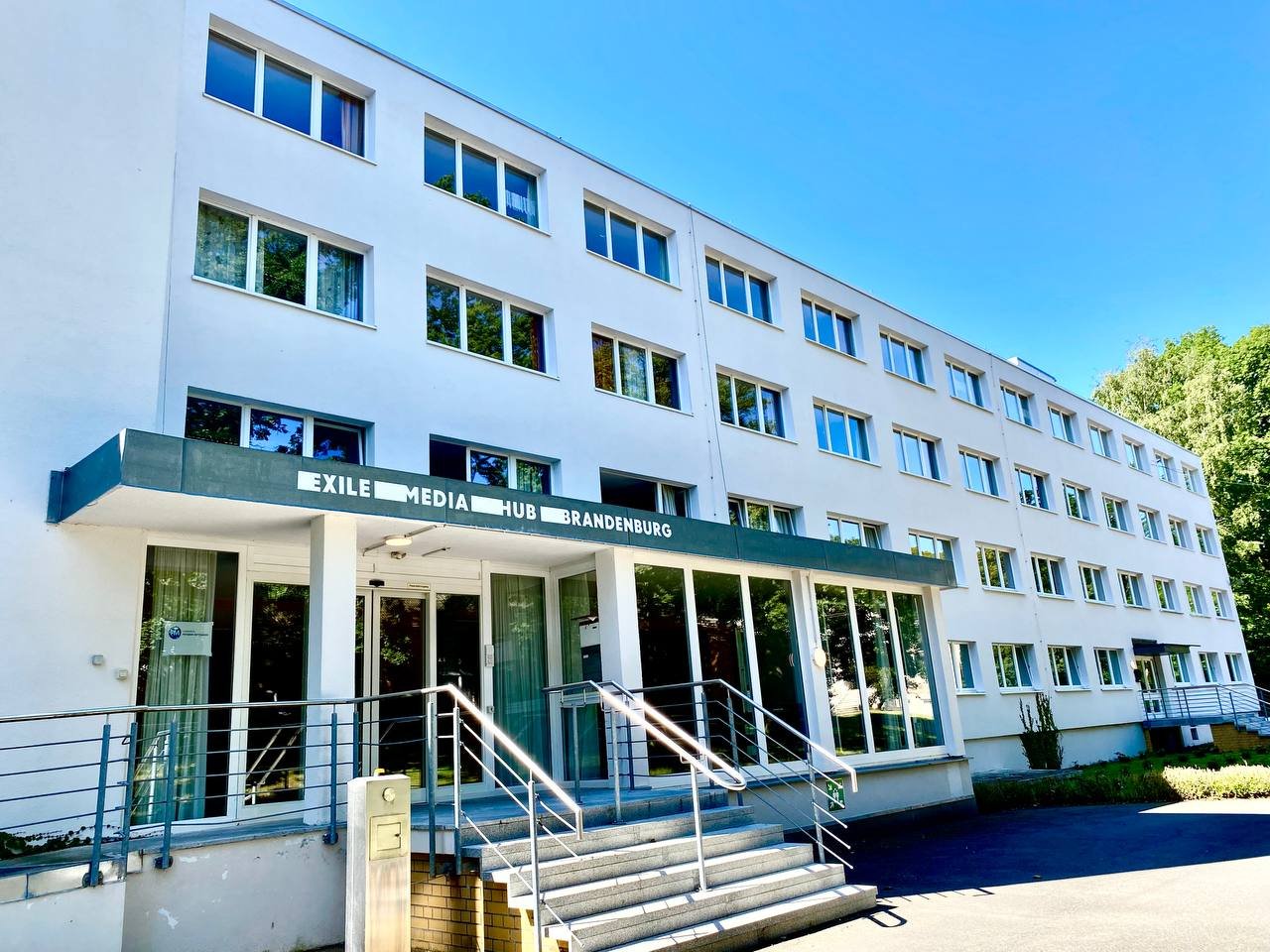
MiCT has been actively searching for a multifaceted property in Berlin, designed to accommodate refugee media makers all under one roof and not too far from our premises. We are delighted to announce that we've finally located such a place.
Partnering with the Wikimedia Foundation, MiCT expanded and diversified user groups in order to fill knowledge gaps, grow content libraries for communities living under transitional contexts, and develop organisational capacity of Wiki user groups to recruit and train new editors as well as manage outreach activities for future expansion.
Journalists who provide vital, pluralistic information that would otherwise be only scarcely available to their communities in crisis and conflict regions often face severe security, professional and financial, restrictions. The MiCT Fellowship for Critical Voices aims to provide quick, uncomplicated support to these media professionals to maintain a critical, pluralistic public discourse during and after conflict situations.
MiCT (Media in Cooperation and Transition) is proud to announce the successful conclusion of its program "Supporting Female Leadership in Journalism and Civil Society" in partnership with GIZ (Deutsche Gesellschaft für Internationale Zusammenarbeit).
Strengthening the voices of women in media is an essential step towards peace. In Libya and Tunisia, a Fellowship Network of female journalists injects fresh ideas into issues of security, transformation, and democracy.
Promoting media literacy means strengthening crisis prevention! In transition countries, media structures are often polarised along party lines. The focus should therefore be on the competencies of media users, because it is they who create the media effects.”
Dr. Anja Wollenberg, founder of MiCT and Head of Research
More: peacelab blog
Revenues are crucial for media outlets to support independent quality journalism. Innovative business models can help to support the the sustainability of local media in Africa and elsewhere.
25 Watt broadcasting power, 12V/5A power supply, 3.4 kg rugged case without moving parts – that’s Pocket FM, a flexible FM transmitter solution for crisis regions, remote areas and disaster zones.
In Uganda, the East Africa Radio Service (EARS) is helping proximity stations to bargain collectively for a bigger share of the advertising market and for better service and rates. EARS began in October 2019 so will be one to watch with interest.”
Mary Myers and Nicola Harford, Media Consultants
More: Local Radio Stations in Africa - Sustainability or Pragmatic Viability?
MiCT conducts research about the role of media in conflict and transformation. MiCT is particularly interested in the connections between conflict development and public communication, and the changes in the self-perception of journalists in times of radical transformation.
Media Academy North Africa (NAMA) is a new institution offering training to journalists, editors and publishers in the MeNa region.
The Blue Peace Media Lab seeks to disseminate constructive and high quality stories that merit attention, foster an interest in the topic and ideally encourage to contribute to better water management as an active citizen or a water professional.
The press in Libya is defined as the profession of troubles. The social consequence of these troubles is faced exclusively by women journalists, firstly because of the cultural beliefs established in society about the distribution of gender roles, and secondly because of the popularity of women in Libya as a means of tactical pressure by the parties to the conflict.”
Rana Akabani, Regional Director North Africa and Co-Director North Africa Media Academy
Political Parties have to be in a constant dialogue in modern democracies, online as well as analog. A new joint project by MiCT and the Friedrich Ebert Foundation (FES) Khartoum aims at strengthening the acceptance of democratic parties and thus the acceptance of the democratic system in the overall population - in the run up to the 2021 elections.
Radio Dramas provide vital information about the COVID-19 pandemic, helping people, particularly rural communities, in Uganda to cope with the crisis.
Political and social issues are often addressed by music, theatre, art and literature – this holds true for inter-communal warfare in South Sudan as well as revolutionary clashes in Sudan or Egypt.
Women journalists don’t have the same access to places, people and regions as their male counterparts. Therefore most stories lack one perspective - our perspective.”
Kholoud Ramezi, Baghdad, MiCT Editor Iraq
Citizen Journalism has rocked the world from Bejing to Beirut. In four cities across Iraq, MiCT supported citizen voices for peace. With elements of Media Literacy training and Production Assistance, over 80 Citizen Journalists have made an imprint on their local communities through
How to reach people that are hardly connected to the internet and live in remote areas with no access to radio?
Since 2017 The Niles aims to support transboundary water cooperation in the Nile Basin. MiCT has been implementing this transboundary journalism capacity building and publishing programme with Correspondents from the 10 member states of the Niles Basin Initiative.