Strategic Communication for Iraq's Integrity and Judicial Institutions
Effective anti-corruption efforts depend on more than enforcement. They depend on public trust. When citizens can access clear information about how integrity and judicial institutions work, understand how decisions are made, and feel confident that their voices are heard, institutions become more effective and accountability becomes more meaningful. Strategic communication is not a secondary concern for anti-corruption bodies — it is central to their mandate.
In Iraq, strengthening this connection between institutions and the public is a priority. MiCT was commissioned by the United Nations Development Programme (UNDP) to support four of Iraq's key integrity and judicial institutions in developing the communication strategies and internal capacity needed to engage more effectively with citizens, media, and stakeholders. The project ran from December 2024 to December 2025.
The Institutions
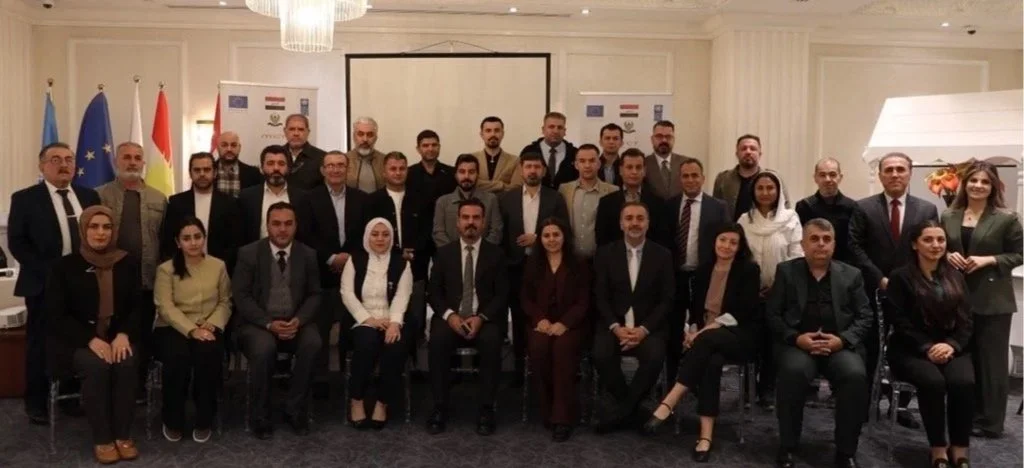
The project engaged the Federal Commission of Integrity and the Supreme Judicial Council in Baghdad, and the Kurdistan Region Commission of Integrity and the Kurdistan Region Judicial Council in Erbil — four bodies at the heart of Iraq's accountability architecture.
Research and Analysis
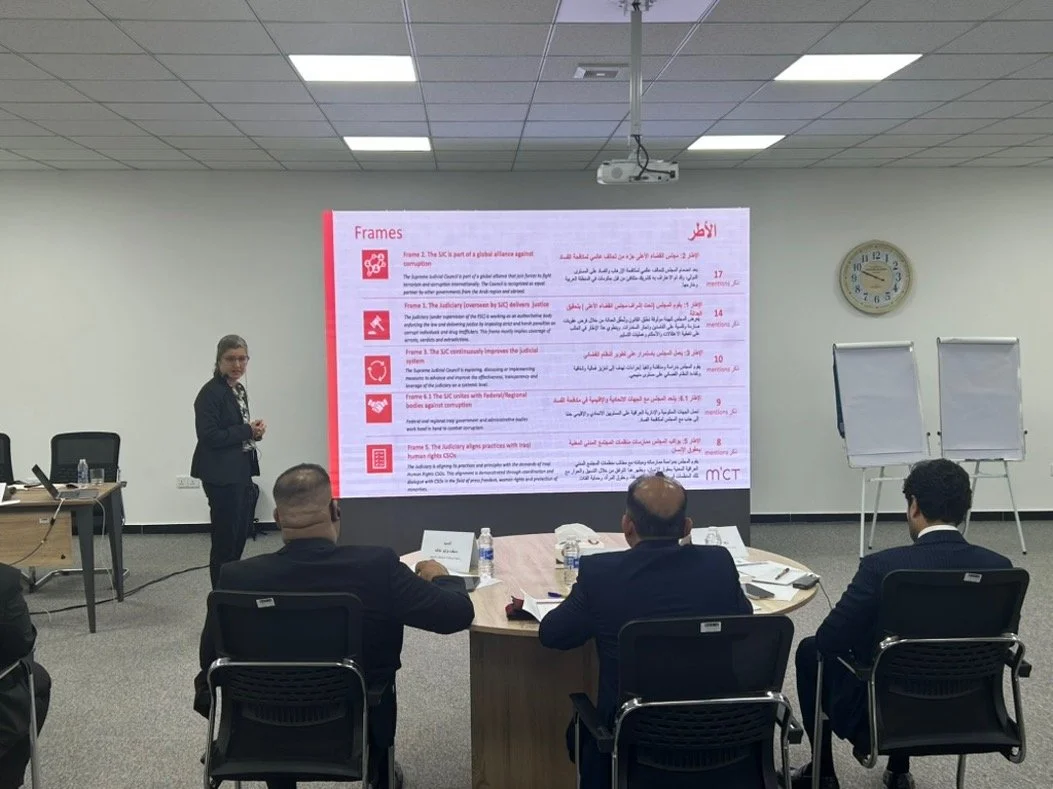
Before any strategy work began, MiCT conducted a thorough research phase to ensure that what followed was grounded in evidence. For the two federal institutions, this included a full discourse analysis examining how their work was covered across 13 online media channels — looking at language use, source selection, topic prioritisation, and the framing of institutional activities. For the Kurdistan Region institutions, detailed social media assessments were conducted, reviewing digital presence, platform functionality, and public responsiveness.
The analysis also incorporated a review of each institution's political context, previous communication challenges, and positioning within Iraq's broader governance structure. This evidence base directly informed the tailored communication strategies developed for each institution.
Capacity Building
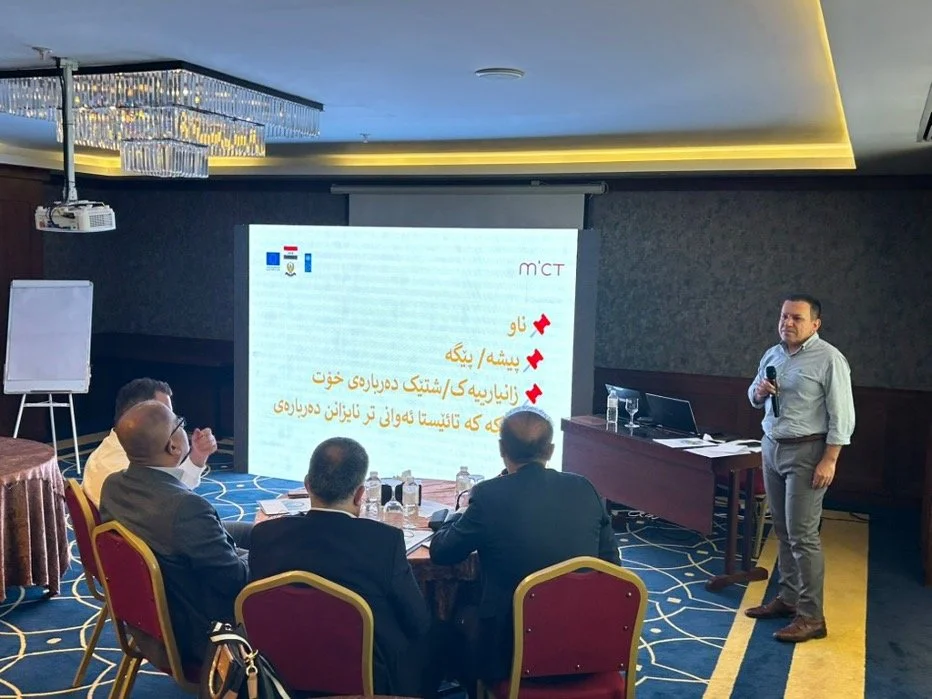
Four three-day workshops were delivered — two in Baghdad and two in Erbil — in Arabic and Kurdish, with 51 participants drawn from communication, media, public relations, and IT departments. Each workshop was built around the institution's specific communication strategy and designed to be practical rather than theoretical, combining structured presentations with interactive discussions, role-playing exercises, and real-time feedback.
Training covered strategic communication planning, audience segmentation, internal and external communication frameworks, crisis communication protocols, press conference preparation, media engagement, content development for digital platforms, and the use of AI tools for communication. Legal awareness sessions, including participants' rights when engaging with government sources and institutions, were integrated into the Baghdad workshops.
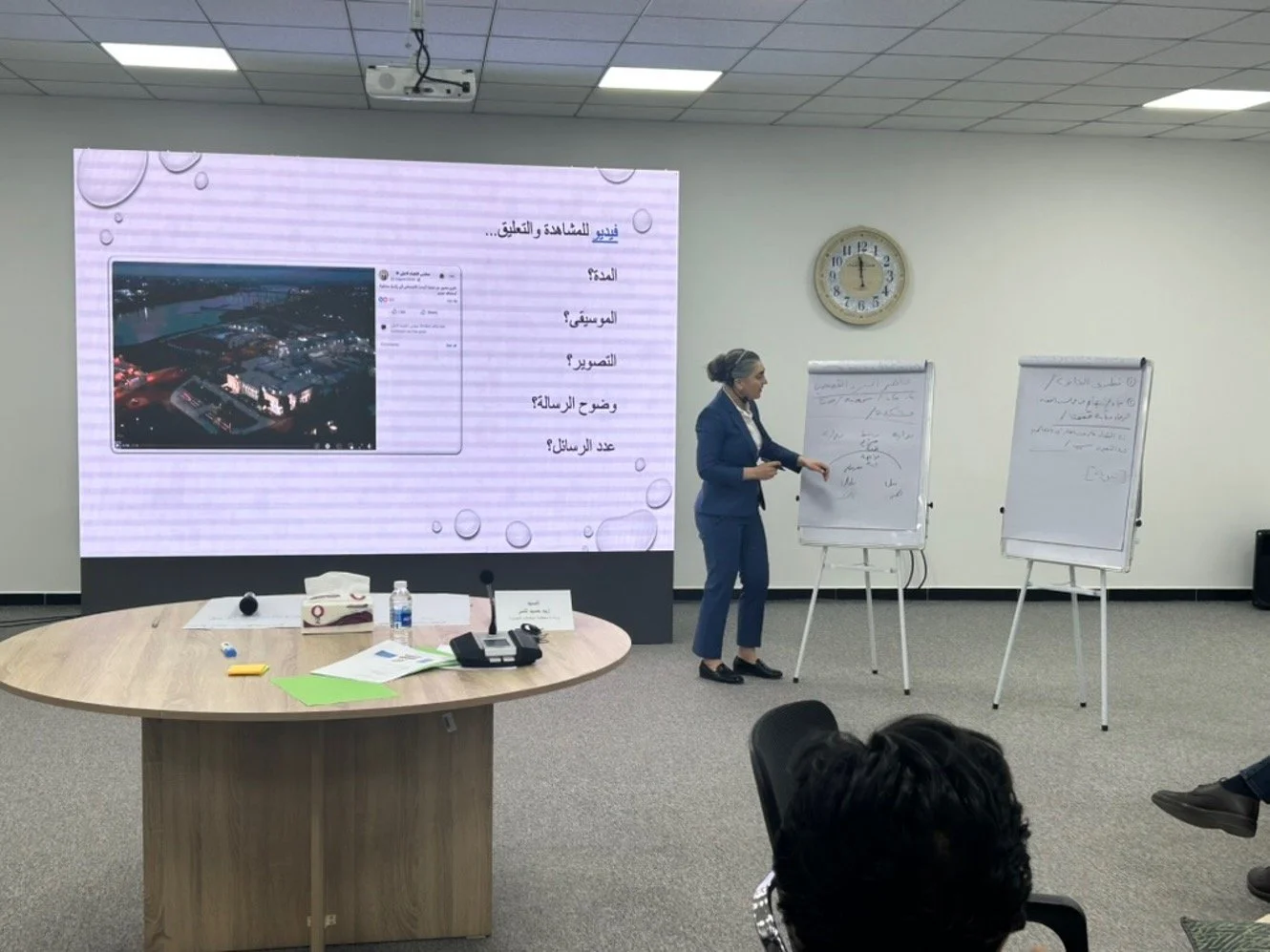
Following the workshops, each institution received ten individual online mentoring sessions focused on translating strategy into day-to-day practice — covering content creation, social media strategy, campaign planning, visual communication, and audience monitoring.
Results
Knowledge gains were significant across all four institutions. The share of participants able to clearly distinguish between internal and external communication rose from an average baseline of around 40% to above 80% by the end of the programme. Legal awareness scores among participants in the Baghdad workshops rose from an average of 2.7 to 4.2 out of 5.
Institutional practice also began to shift. The Federal Commission of Integrity published a social media video promoting their free corruption reporting hotline in Iraqi dialect, using plain language and a direct call to action — a meaningful step toward more citizen-facing communication. The Supreme Judicial Council began making judicial decisions more accessible through short-form digital content and graphic overlays. Both Kurdistan Region institutions updated their digital presence and began expanding their platform reach to wider audiences.
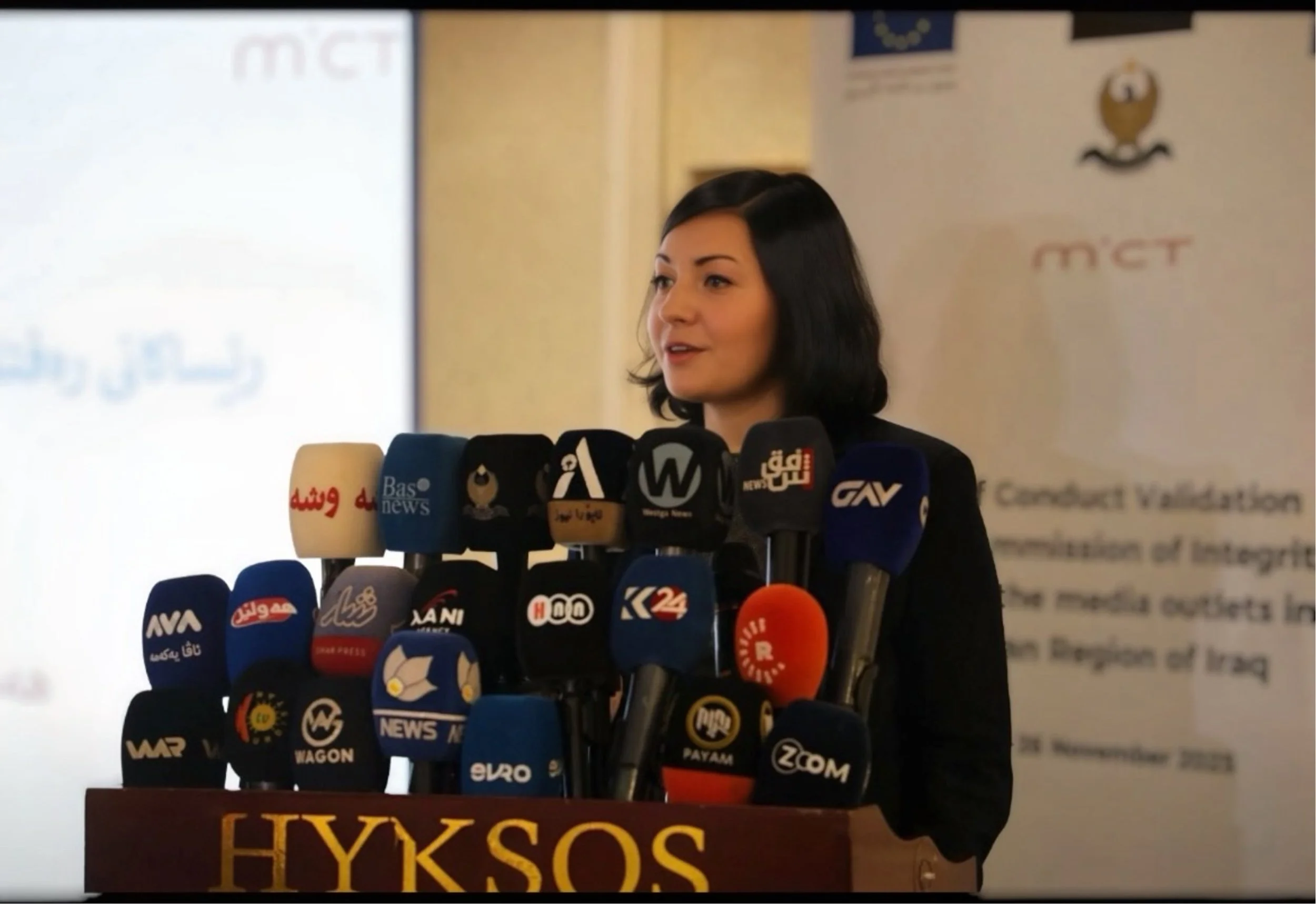
As an additional deliverable, MiCT developed a Code of Conduct for Integrity in Media in the Kurdistan Region, endorsed by the Kurdistan Region Commission of Integrity.
This project was funded by the United Nations Development Programme (UNDP).