Creating Spaces to Heal: Murals of Memory
Since the end of the conflict with the Islamic State, Iraq's communities have been navigating a difficult process of return and reintegration. In areas such as Salahaddin, Anbar, Diyala, and Kirkuk, displaced persons face limited access to services, inadequate housing, and the absence of meaningful reconciliation mechanisms. The closure of camps has intensified tensions between returnees and host communities, leaving divisions that official discourse alone has not been able to bridge.
“The workshop changed my perception of media and art as active tools in shaping reconciliation, influencing how conflicts are understood and how collective memory is formed.”
In response, MiCT is implementing "Creating Spaces to Heal: Murals of Memory" — a seven-month initiative that brings together local journalists, visual artists, community members, and government representatives to co-create public murals and journalistic stories rooted in the lived experiences of both returning and host communities.
Four journalist-artist teams, each paired with a specific governorate, are developing one community mural and one accompanying journalistic story per location, culminating in a composite installation in Baghdad. Each mural will feature a QR code linking to firsthand testimonies from community members, creating a bridge between physical public art and broader digital engagement.
The project also works with Iraq's Soft Power Committee and representatives from the Ministries of Culture and Education. Through a structured digital mentorship programme, selected government representatives are developing the skills to design and launch a unified national social media campaign on reconciliation and unity — ensuring that institutional messaging aligns with and amplifies the community-driven narratives the project produces on the ground.
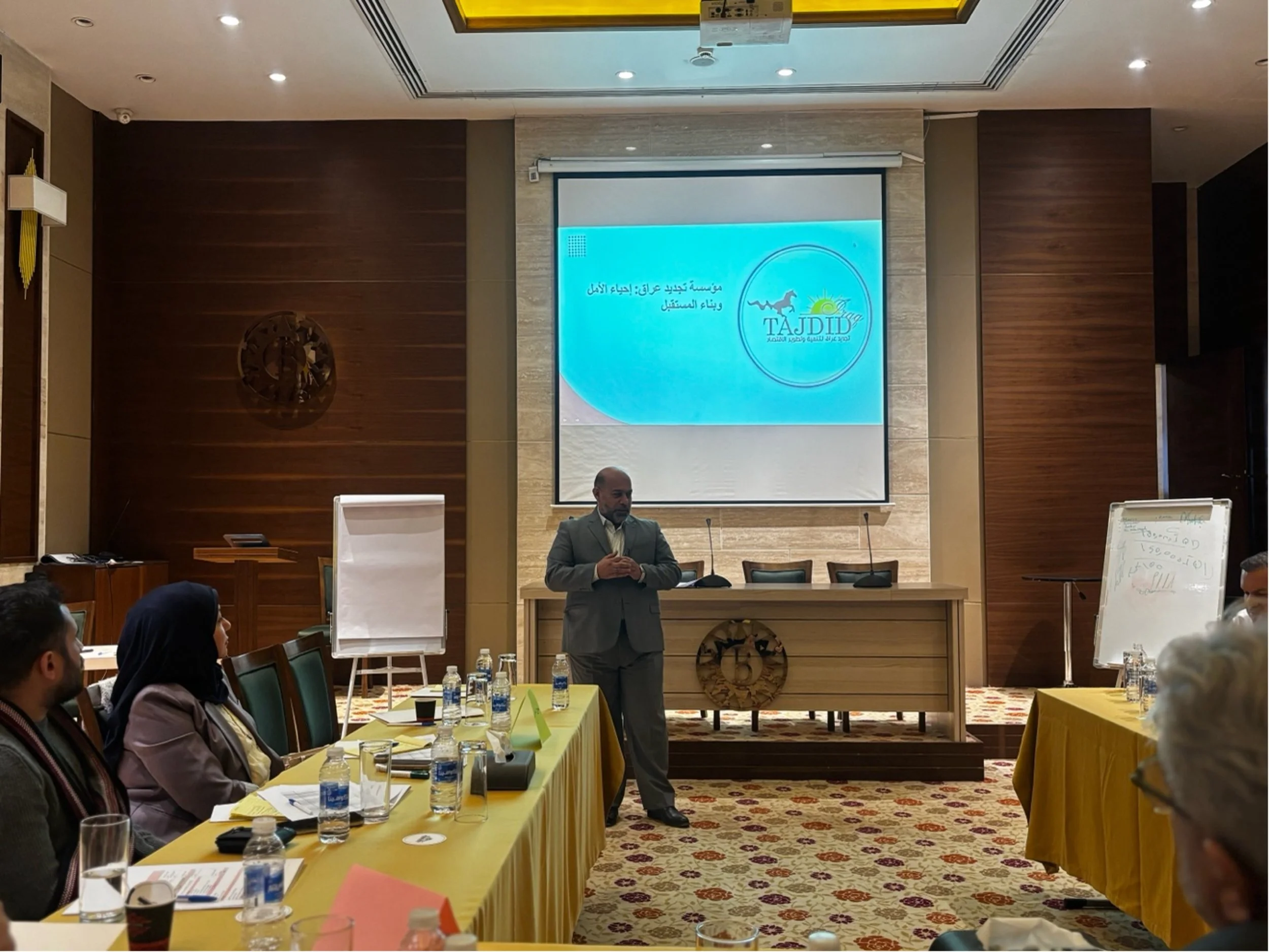
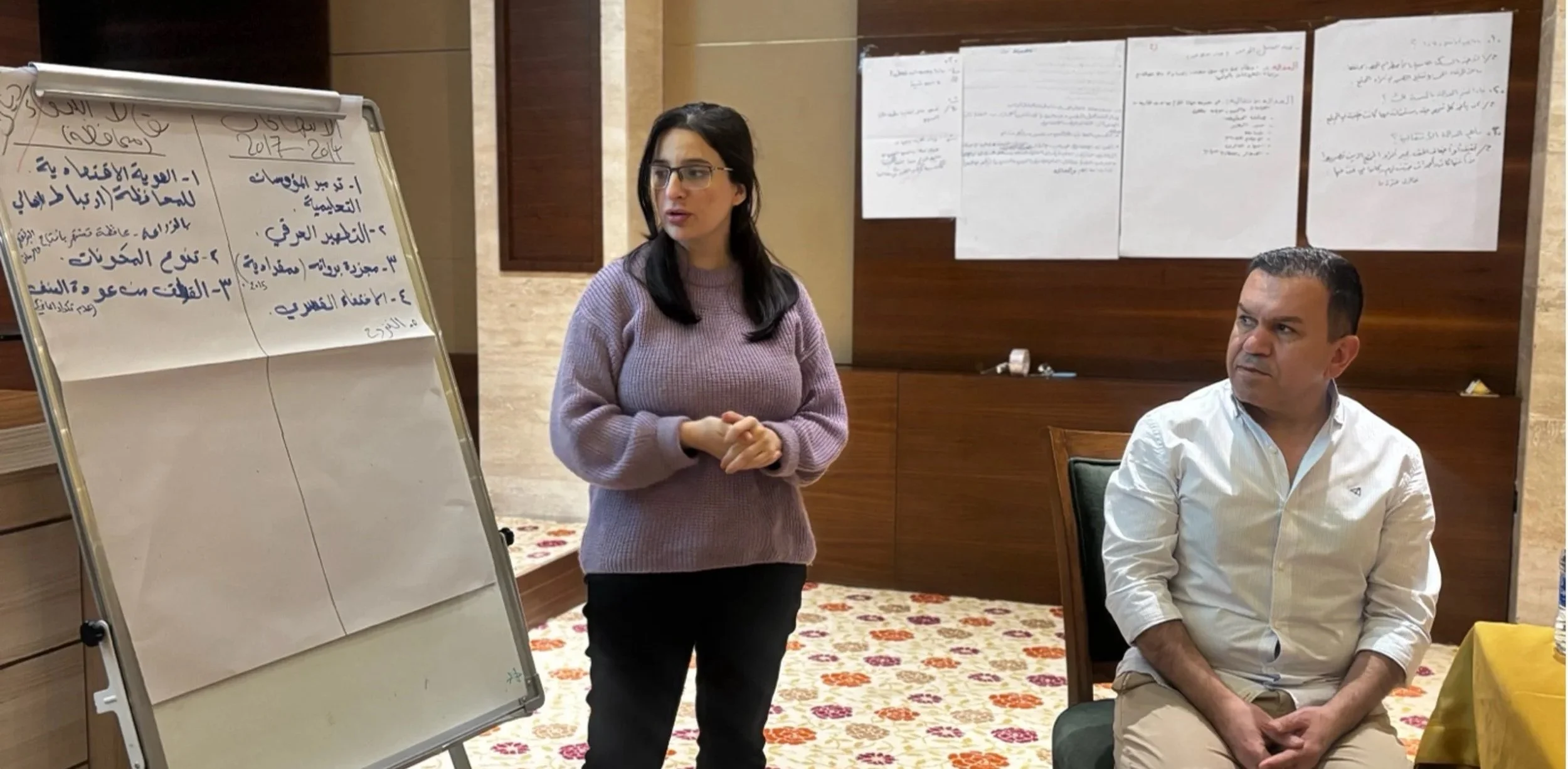
The project launched in January 2026 with a two-day participatory design workshop in Baghdad, bringing together eight selected journalists and visual artists from across the targeted governorates. Sessions focused on the core pillars of transitional justice, including memorialization, constructive storytelling, and ethical reporting in post-conflict settings. Field visits to community sites are now underway, where journalist-artist pairs — supported by local partner Tajdid Foundation, a peacebuilding NGO with experience and networks across all four governorates — are conducting interviews with returnees and host community members, identifying mural locations in consultation with local residents, and collecting the narratives that will shape both the visual and journalistic outputs.
“The most important concept for me was using memory and narrative as tools for social healing. These approaches create space for expression, acknowledge lived experiences, and help build mutual understanding within communities.”